


The Coins of the Constantinian Era: How Constantine the Great Transformed Roman Coinage
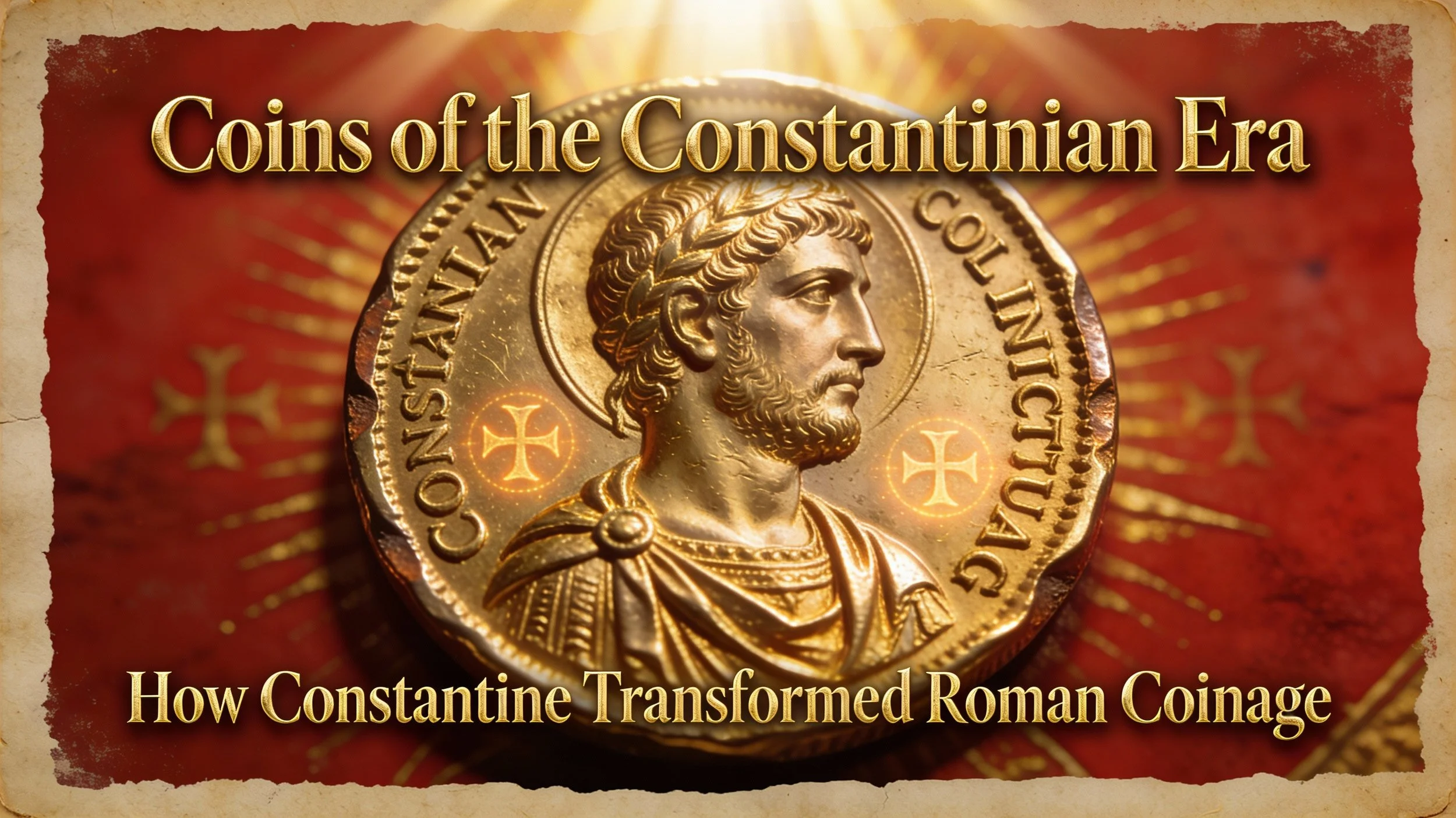
The Dawn of a New Empire
In the early fourth century, Rome stood at a turning point. Civil wars, shifting loyalties, and looming economic pressures threatened to split the empire apart. Yet from this turbulence rose Constantine the Great (AD 306–337) — a visionary ruler who not only reshaped imperial power but also forever changed how Rome expressed identity through its coinage.
Constantinian coins occupy a fascinating threshold between pagan tradition and Christian transformation, serving as miniature chronicles of Rome’s evolution. Each coin struck during his reign whispers a story of faith, propaganda, and reform.
Monetary Reform and Imperial Control
Constantine recognized that economic stability was the key to consolidating power. Around AD 310, he introduced the solidus, a new gold coin valued at 1/72 of a Roman pound. This reform ended decades of inflation and restored confidence to Rome's fiscal system. The solidus soon became the backbone of Roman and Byzantine trade for centuries, outlasting the empire itself.
In bronze denominations like the follis and centenionalis, Constantine’s mints across the empire—from Trier to Antioch—reflected imperial unity through standardized designs and inscriptions. Coins became tools of both economics and ideology, spreading the emperor’s presence into every marketplace and military outpost.
From Pagan Gods to Christian Symbols
Early Constantinian issues still honored traditional figures like Sol Invictus, the Unconquered Sun, a deity deeply associated with imperial power. Yet by the mid-320s, a profound visual shift occurred: the Chi-Rho christogram appeared on coin standards, helmets, and shields—a coded but unmistakable profession of Christian allegiance.
This subtle transition marked the first time the Christian faith publicly entered the visual vocabulary of Roman coinage. For collectors today, such coins are powerful witnesses to history, embodying the fusion of divine favor and imperial legitimacy that defined Constantine’s rule.
The Legacy of the Constantinian Dynasty
After Constantine’s death, his sons—Constantine II, Constantius II, and Constans—continued his monetary and ideological vision. Their coins retained imperial grandeur but emphasized new Christian motifs, including crosses, laurel wreaths, and references to Vota (vows of faith and victory).
This dynasty’s issues laid the artistic foundation for Byzantine numismatics, where Christian symbolism became central. The Constantinian coinage thus bridges the gap between classical Rome and medieval Christendom—a transformational passage minted in copper, silver, and gold.
For the Modern Collector
To hold a Constantinian coin is to touch a moment of revolution. Each worn portrait or faded inscription represents a fragment of one man’s quest to redefine empire and eternity. Whether a collector treasures a simple AE3 from Nicomedia or a gleaming gold solidus, these pieces invite us into the world where politics, faith, and currency intertwined.
At KinzerCoins, we see these artifacts not merely as collectibles, but as voices from antiquity—reminders that even the smallest coin can carry the weight of an empire’s soul.