


The Tragic Story of Crispus: Constantine's Forgotten Son
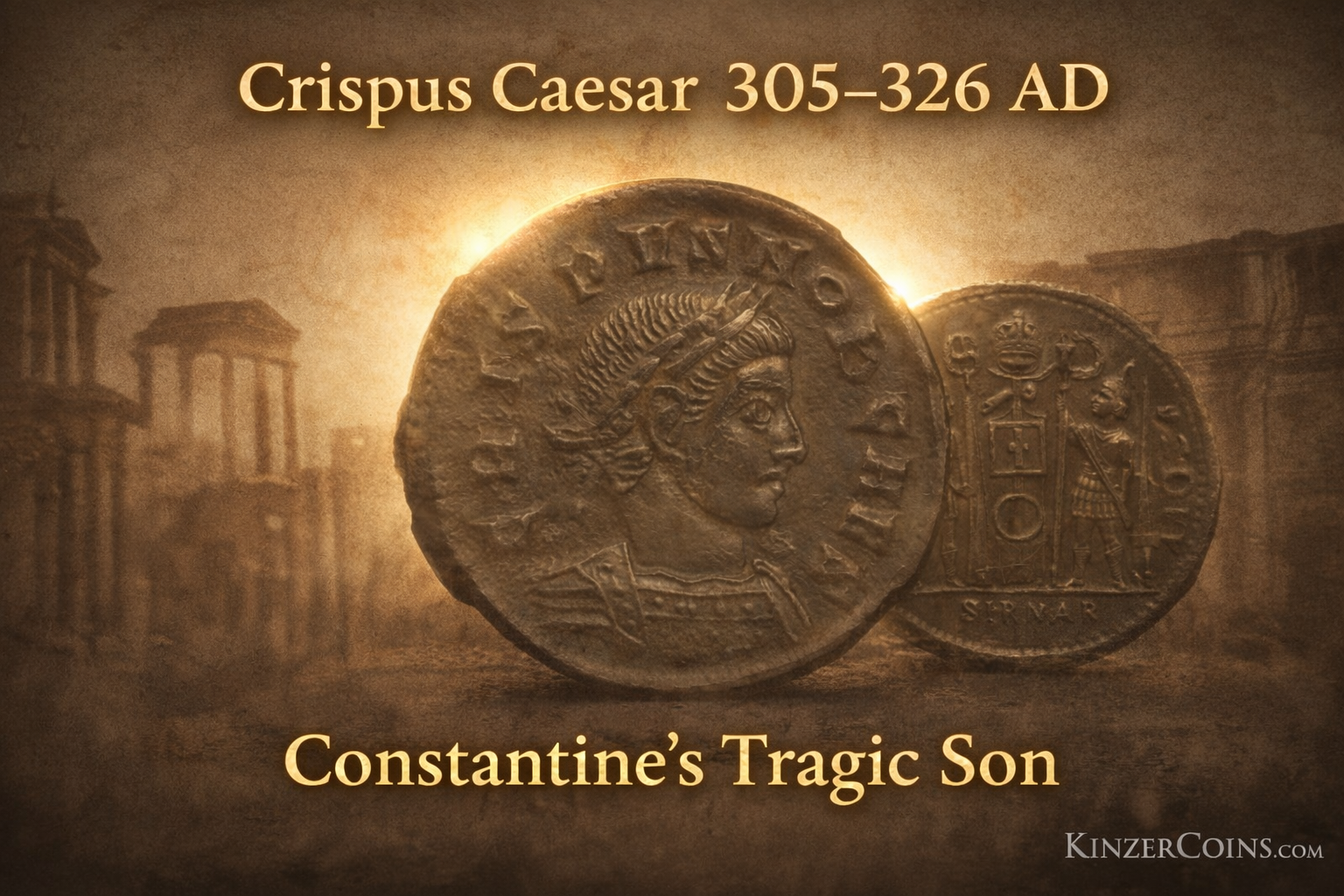
Authentic Roman bronze coin of Crispus Caesar (AD 305–326), NGC certified, shown in a cinematic historical thumbnail with parchment background and Roman ruins.
Imagine holding a small bronze coin struck nearly 1,700 years ago - a silent witness to one of Rome's most shocking family tragedies. This is the coin of Crispus, eldest son of Constantine the Great, minted during his brief rise as Caesar from 317-326 AD.
At Kinzer Coins, these authentic NGC-certified pieces offer beginners a meaningful way to connect with ancient history through carefully curated ancient coins.
Crispus' Rise and Sudden Fall
Born around 305 AD to Constantine's first wife Minervina, Crispus showed early promise. Named Caesar at age 12, he governed Gaul, Britain, and Spain while crushing Gothic invasions and winning key naval battles against Licinius.
His bronze AE3/AE4 coins - featuring his youthful laureled portrait on the obverse and military symbols on the reverse - circulated during Rome's transformation toward Christianity under his father. Then came 326 AD.
Stepmother Fausta leveled accusations against him. Constantine ordered Crispus' execution, possibly by beheading at Pola, Croatia. Months later, Fausta herself died in an overheated bath by imperial command. Crispus faced damnatio memoriae - total erasure from history.
What Makes This Coin Special
These small bronze coins capture a pivotal moment when traditional Roman pagan imagery persisted even as Christianity gained ground. The obverse shows Crispus facing right with laurel wreath or rosette diadem, inscribed "CRISPVS NOB CAESAR."
The reverse typically features military standards, Victory figures, or imperial virtues with mint marks from Siscia, Trier, or Lyons. NGC graded Fine with natural circulation wear, these represent both artistic and historical significance from the Constantinian dynasty.
Why Collectors Value Crispus Coins
Coins of executed Roman imperial family members survive in lower numbers due to deliberate destruction following damnatio memoriae. This scarcity, combined with the compelling human drama of Crispus' story, makes them particularly meaningful for those exploring Roman history.
The coin connects directly to Constantine's era - a time of military reform, religious transformation, and intense family intrigue at the empire's highest levels.
Discovering Ancient Coins at Kinzer Coins
Kinzer Coins specializes in accessible ancient coins perfect for those new to numismatics. The "New to Ancients" collection includes pieces like Crispus bronzes with full NGC certification, grading information, and context to help beginners build knowledge and confidence.
Available here: https://www.kinzercoins.com/shop/p/roman-ae-of-crispus-ad-304-326-ngc?rq=crispus
Kinzer Coins: Helping newcomers explore and understand ancient numismatics.